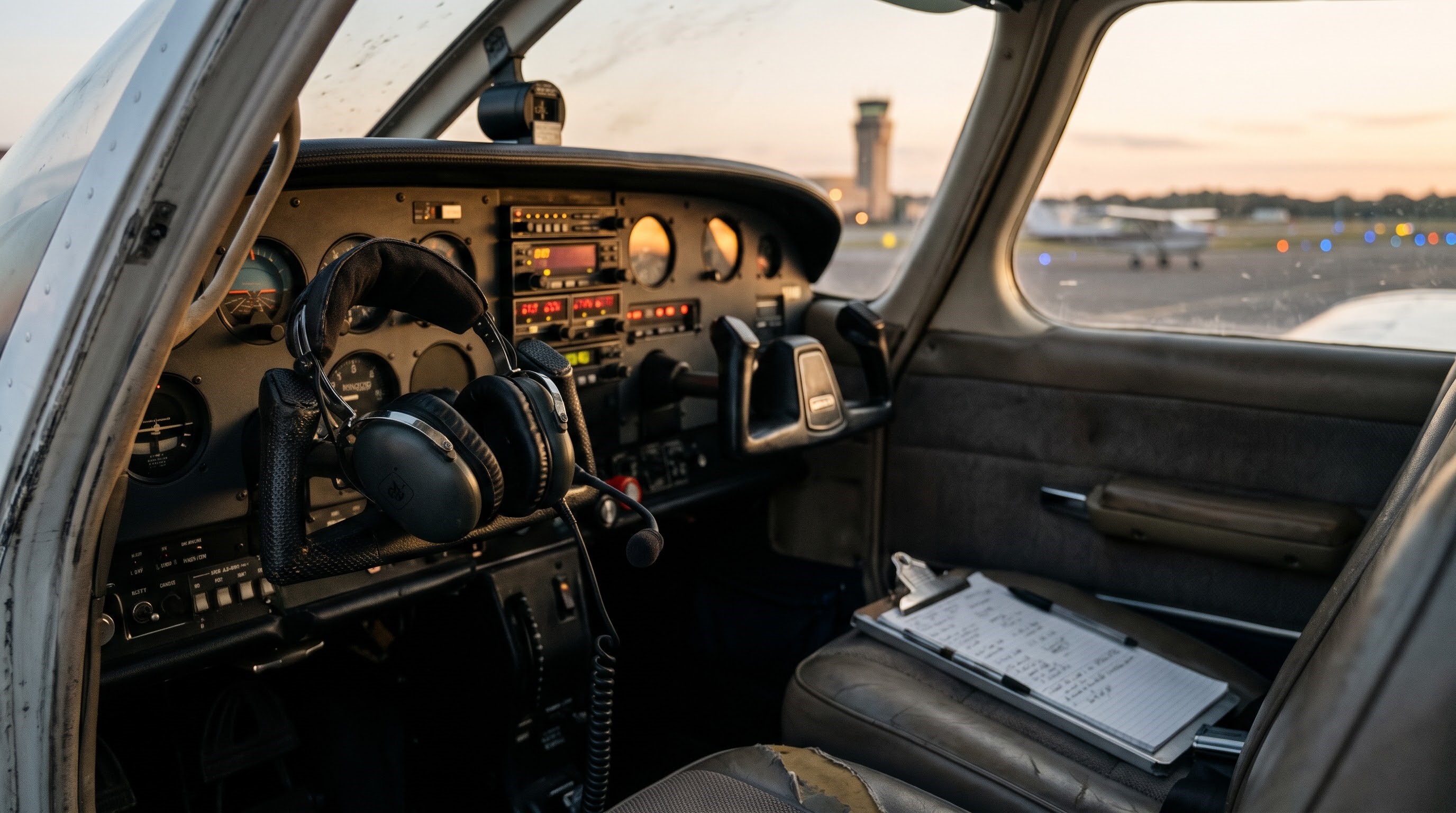
RTR(A) Exam for Pilots in India: Format, Syllabus and Preparation Guide (2026)
What is the RTR(A) exam, who conducts it, and how should pilots prepare? A clear guide to the format, syllabus, and study approach for aspiring pilots.
The RTR(A) exam, short for Radio Telephony Restricted (Aeronautical), is the radio operator qualification that pilots in India need in order to communicate with air traffic control. It is often grouped with the DGCA exams because it is part of the road to a Commercial Pilot Licence, but it is actually conducted by the Wireless Planning and Coordination wing of the Department of Telecommunications, with its own application process, schedule, and certificate. To see how this fits with the other papers, read our guide to DGCA ground classes and subjects.
What Is the RTR(A) Exam?
Pilots use radio to talk to air traffic controllers and to other aircraft, and they must do so in a precise, standard way. The RTR(A) qualification confirms that a candidate understands the rules of aeronautical radio communication and can use the correct phraseology. Without it, a pilot cannot legally operate an aircraft radio, which is why it forms part of the requirements for a licence.
Who Conducts the RTR(A) Exam?
The exam is conducted by the Wireless Planning and Coordination wing, usually called WPC, which sits under the Department of Telecommunications. It is not a DGCA exam, so you apply through the WPC process and follow the WPC exam schedule, which is announced separately. Because exam sessions are held at limited centres and only at certain times of the year, it is wise to check the official schedule well in advance.
RTR(A) Exam Format
The exam is usually described as having two parts.
Part 1: Practical Transmission
This part tests your ability to communicate on radio using correct procedures and phraseology. You are assessed on how clearly and correctly you handle standard calls, such as requesting clearances, reporting positions, and responding to instructions. Accuracy and calm delivery matter more than speed.
Part 2: Written Paper
This part tests the theory behind radio communication. It covers topics such as radio regulations, communication procedures, basic principles of radio and radio waves, and the navigation aids used in aviation.
What the Syllabus Covers
The syllabus centres on how aeronautical radio communication works and how it is regulated. Candidates study standard phraseology, the structure of radio calls, the meaning of distress and urgency messages, the rules for operating aircraft radio equipment, and the basics of radio navigation facilities. A good understanding of how air traffic control instructions are phrased and responded to helps in both parts of the exam.
Why Many Students Find It Challenging
The RTR(A) exam is different from the DGCA theory papers. The practical part is closer to a live communication test than a written exam, so reading alone is not enough. Students who are not used to speaking in strict standard phraseology often feel nervous, and small slips in wording can cost marks.
How to Prepare for the RTR(A) Exam
Start by learning standard phraseology until it becomes second nature. Practise speaking aloud, ideally with a partner who plays the role of air traffic control, and use realistic scenarios such as departure, enroute, and arrival calls. Make sure you also study the written syllabus, especially regulations and radio fundamentals. Use mock sessions to build confidence, and listen to recorded pilot and controller exchanges to get used to the rhythm of real radio calls. For general study habits, read our DGCA exam preparation tips.
Frequently Asked Questions
Is the RTR(A) exam part of the DGCA exams?
No. It is conducted by the Wireless Planning and Coordination wing of the Department of Telecommunications, although it is a required step toward a pilot licence. Always check the official WPC notices for dates and application steps.
When should I attempt the RTR(A) exam?
Many students prepare for it alongside their ground school so that they are ready when a suitable exam session is announced. Your academy can advise on timing based on your overall training schedule.
Can I prepare for RTR(A) on my own?
You can study the written syllabus on your own, but the practical part benefits greatly from guided practice with an instructor or partner, because it tests spoken communication.
Prepare for RTR(A) With AVIORA
AVIORA Aviation Academy in Hyderabad includes radio telephony practice as part of its ground training, with instructors who are working airline pilots, so students can build confidence in standard phraseology well before their exam. Speak to our admissions team to find out about the next batch.
Ready to start the process? Aviora's admissions team responds within 48 hours.
Enroll Now →