DGCA Navigation and Meteorology: What to Expect and How to Prepare (2026)
What do the DGCA Air Navigation and Aviation Meteorology papers cover? A clear breakdown of the topics, the common difficulties, and how to prepare.
Air Navigation and Aviation Meteorology are two of the core DGCA theory papers for a Commercial Pilot Licence. Navigation teaches you how to plan and fly an accurate route using charts, calculations, and radio aids, while Meteorology teaches you how weather forms and how it affects flight safety. Both are examined separately, and both reward steady practice more than memorisation. For the full list of papers, read our guide to DGCA ground classes and subjects.
Why These Two Papers Matter
Navigation and Meteorology sit at the heart of everyday flying. Every flight begins with planning a route and checking the weather, so the knowledge you build here is used throughout your career, not just in the exam. Many students also find these two papers among the more demanding, which is why it helps to know what to expect.
What the Air Navigation Paper Covers
Air Navigation is a calculation based subject. It builds the skills needed to know where you are, where you are going, and how long it will take to get there.
Charts and Position
You learn how aeronautical charts are constructed, how to read scale, latitude, and longitude, and how to measure tracks and distances. This is the foundation for everything else in the paper.
Direction, Variation, and Deviation
Pilots work with true, magnetic, and compass headings. You learn why these differ and how to convert between them, using magnetic variation and compass deviation.
Wind and the Navigation Triangle
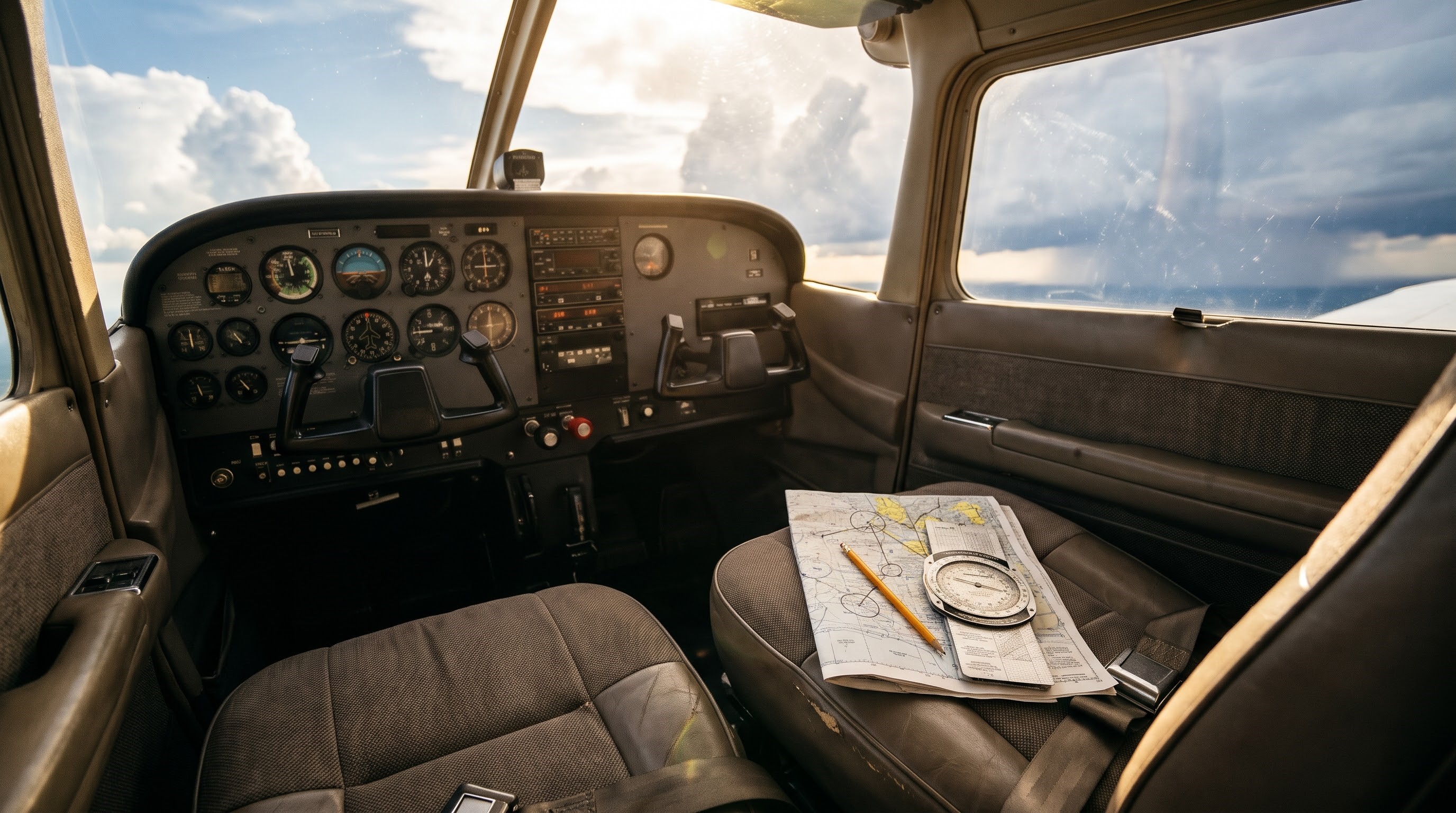
A large part of the paper deals with wind. You learn how wind affects heading, track, and ground speed, and how to solve the wind triangle using a flight computer. Speed and accuracy with the computer matter a great deal here.
Flight Planning
This covers working out time, fuel, and distance for a route, including estimated time of arrival, fuel requirements, and reserves.
Radio Navigation Aids
You study how ground based and satellite aids work and how pilots use them, including systems such as VOR, DME, and GPS, along with the limits of each.
What the Aviation Meteorology Paper Covers
Meteorology is more descriptive than navigation, but it still demands careful understanding. It explains why weather behaves as it does and what that means for a pilot.
The Atmosphere and Pressure
You learn the structure of the atmosphere, how pressure and temperature change with height, and how these affect altimeter readings and aircraft performance.
Winds and Air Masses
This section covers how winds are produced, how they vary with height, and how air masses and fronts form and move across a region.
Clouds, Fog, and Visibility
You study how clouds form, the types of cloud, and the conditions that produce fog and poor visibility, all of which affect whether a flight can be flown safely.
Thunderstorms, Icing, and Turbulence
These are the hazards pilots most need to understand. You learn how thunderstorms develop, why icing is dangerous, and what causes turbulence, along with how to avoid each of them.
Reading Weather Reports
You learn to read and interpret aviation weather reports and forecasts, which pilots use to decide whether to depart and which route to take.
Common Difficulties Students Face
In Navigation, students most often struggle with the wind triangle and with working quickly under time pressure. In Meteorology, the challenge is usually the sheer volume of terms and concepts, and connecting them to real flying decisions. Neither is out of reach, but both improve noticeably with consistent practice.
How to Prepare
For Navigation, solve a few problems every day and practise using your flight computer until it feels natural. For Meteorology, build a clear picture of how weather systems work first, then revise terms and definitions using short notes and diagrams. In both papers, mock tests help you spot weak areas early.
Frequently Asked Questions
Which is harder, Air Navigation or Aviation Meteorology?
It depends on the student. Many find Navigation harder because of the calculations, while others find Meteorology harder because of the amount of material. Practising your weaker paper a little every day usually closes the gap.
Do I need a calculator or flight computer for these papers?
Navigation relies heavily on a flight computer, and you should practise with the one you will use. Check the current DGCA rules and your academy's guidance on what tools are permitted in the exam.
Can I take Navigation and Meteorology in the same exam session?
Many students do, but some prefer to attempt them in different sessions to keep their preparation focused. Your instructors can advise based on your strengths.
Master Navigation and Meteorology With AVIORA
AVIORA Aviation Academy in Hyderabad teaches Air Navigation and Aviation Meteorology through structured classes taught by airline pilots, with regular practice problems and mock tests to build both speed and understanding. Speak to our admissions team to find out about the next batch.
Ready to start the process? Aviora's admissions team responds within 48 hours.
Enroll Now →